
The Problem With “Mock Interviews” Nobody Talks About

The Problem With “Mock Interviews” Nobody Talks About
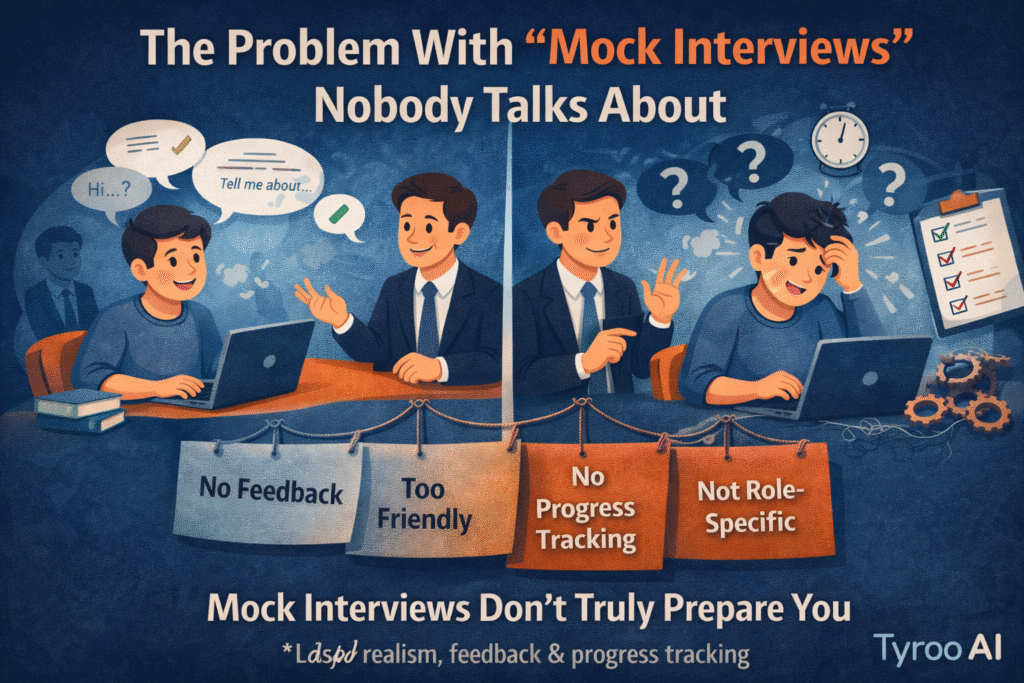
Most candidates are told that giving mock interviews is one of the best ways to prepare for real interviews. While this advice is correct, there is a hidden reality that many people do not discuss: not all mock interviews actually improve performance. Many candidates attend multiple mock sessions but still feel unprepared when the real interview arrives. The problem is not the idea of mock interviews — the problem is how they are conducted and how candidates use them for improvement.
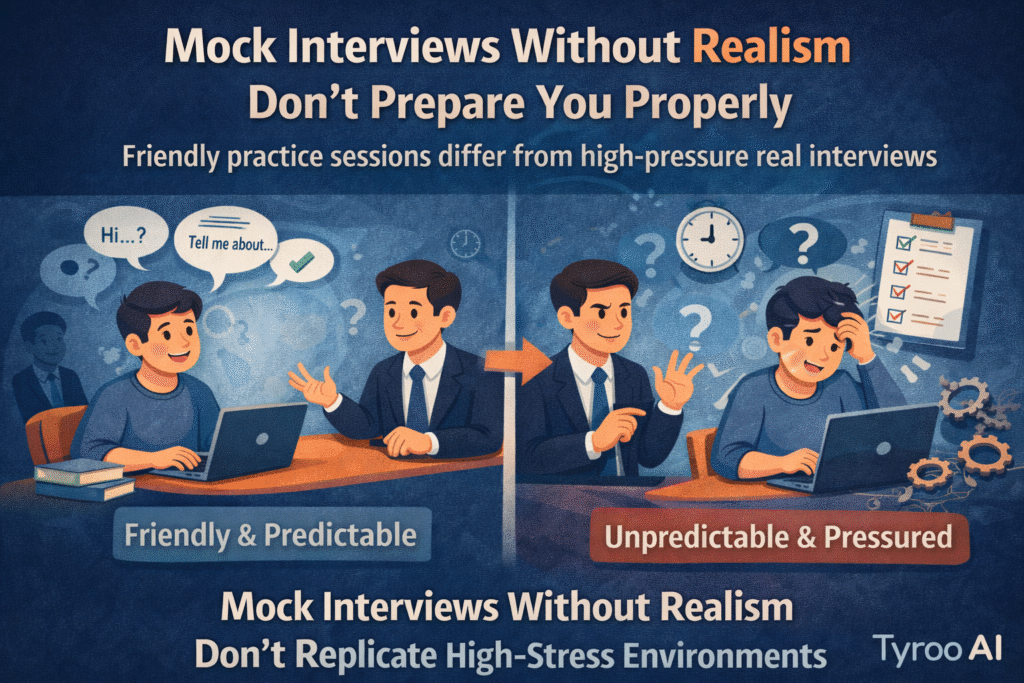
1. Mock Interviews Without Realism Don’t Prepare You Properly
In many cases, mock interviews are conducted in a very comfortable environment where the interviewer is friendly, questions are predictable, and the pressure level is very low. Because candidates already know it is only practice, they do not experience the same nervousness or urgency they would feel in a real interview. As a result, when the actual interview happens with strict time limits and unexpected questions, candidates suddenly feel overwhelmed even though they had “practiced” before.
2. Lack of Detailed Feedback Slows Down Improvement
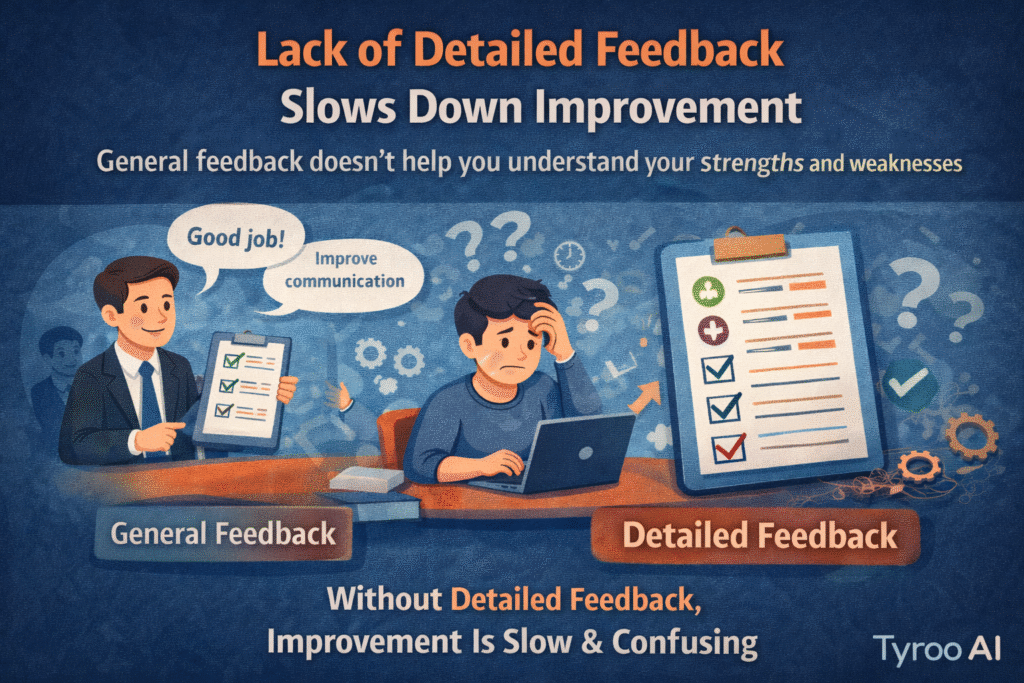
After many mock interviews, candidates receive only general feedback such as “Improve communication” or “Practice more.” While this sounds helpful, it does not clearly explain what exactly needs improvement. Without detailed performance insights — such as where the candidate struggled, which answers lacked structure, or which topics require stronger preparation — improvement becomes slow and unclear.
3. No System to Track Progress Over Time
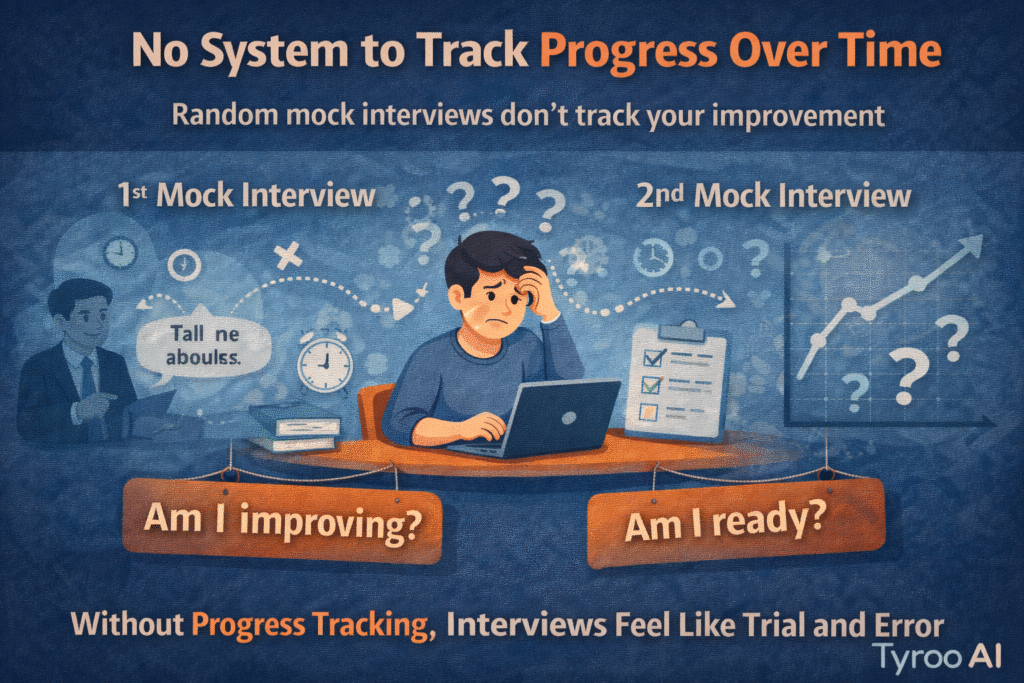
Another common problem is that candidates attend a few mock interviews randomly but do not track their progress. They do not know whether their confidence, communication, or problem-solving ability is actually improving. Without measurable progress tracking, preparation often becomes repetitive instead of strategic, and candidates may continue making the same mistakes without realizing it.
4. Generic Mock Interviews Don’t Match Real Job Roles
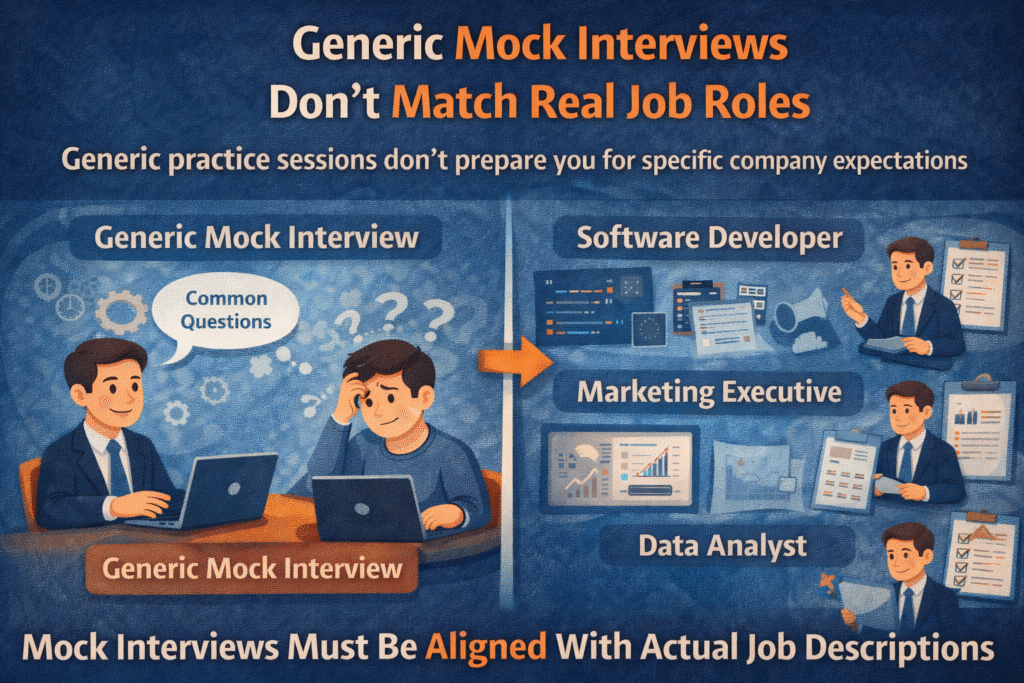
Many mock interviews are generic and not based on the actual job description or company expectations. However, real interviews are highly role-specific. Questions asked for a software developer, marketing executive, or data analyst are very different. When mock interviews are not aligned with real job roles, candidates may practice irrelevant questions while missing the most important ones.
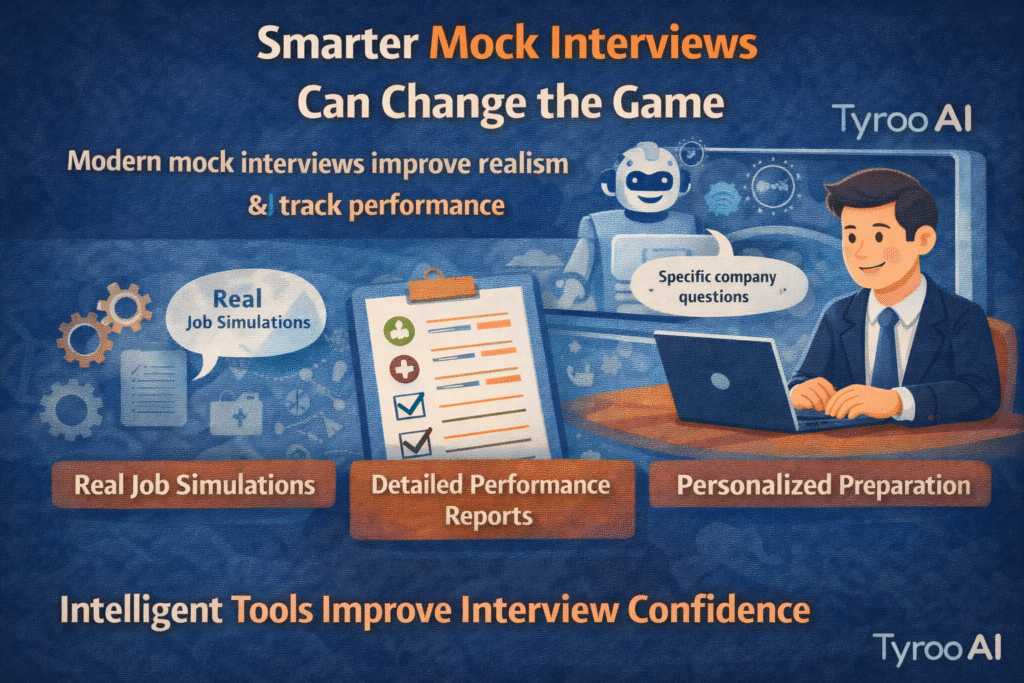
5. Smarter Mock Interviews Can Change the Game
Today, interview preparation is evolving with intelligent tools that simulate real interview environments and provide structured feedback. Platforms like Tyroo AI, an AI-powered career preparation and hiring platform, are designed to make mock interviews more realistic by generating company-specific questions, providing detailed performance reports, and creating personalized preparation roadmaps. This approach helps candidates clearly understand their strengths, identify improvement areas, and prepare more strategically instead of practicing blindly.
Conclusion
Mock interviews are extremely valuable, but only when they are realistic, role-focused, and supported by meaningful feedback. Candidates who combine practice with structured mock interview systems, performance tracking, and continuous improvement strategies develop stronger confidence and perform much better in real interviews. Preparation is not just about practicing more — it is about practicing in the right way.
