
Why My Website Is Slow
If you’ve ever opened your own website and thought, “Why is this taking so long?” — you’re not the only one.
It’s one of those things that people notice immediately, even if they don’t say it.
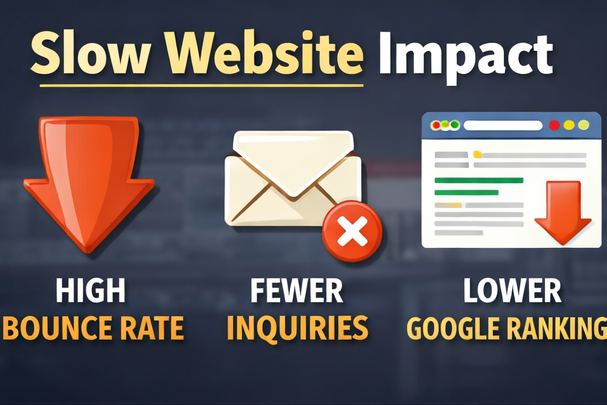
A website doesn’t have to be broken to feel slow. Sometimes it’s just a few extra seconds… but that’s enough for someone to leave before it even loads properly.
And the tricky part is, most of the time, there isn’t just one reason behind it.
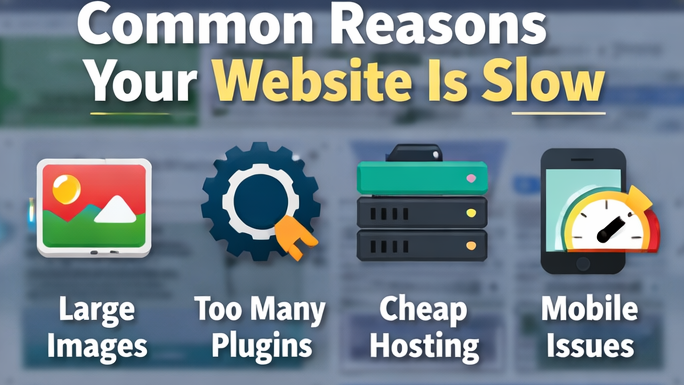
It’s Usually Not One Big Problem
A lot of people expect a single clear issue.
But in reality, slow websites are often the result of small things adding up.
Individually, they don’t seem serious. Together, they slow everything down.
Images Are Often the First Issue
This is something almost everyone overlooks.
You upload a high-quality image because it looks better. Which makes sense.
But large image files take longer to load.
If your page has multiple heavy images, it starts affecting the speed without you realizing it.
Too Many Add-ons Can Slow Things Down
Most websites today use plugins or extra tools.
They add useful features — forms, sliders, animations, tracking, and more.
But every extra feature also adds load time.
It’s like adding more weight to something that already has to move.
Hosting Makes a Bigger Difference Than Expected
This is something many people don’t think about at first.
Hosting is where your website lives.
If it’s slow, your website will feel slow no matter how well it’s designed.
Cheap hosting can work in the beginning, but once traffic increases, performance usually drops.
Sometimes It’s Just Never Been Optimized
A lot of websites are built once and then left as they are.
No updates. No performance checks.
Over time, things start to slow down.
Not because anything is broken — just because nothing was improved.
Mobile Experience Is Often Ignored
You might check your website on a laptop and think everything is fine.
But most visitors are using their phones.
And if the mobile version is slow, that’s what they experience — not what you see on your screen.
A Situation That Happens Quite Often
A business owner once said their website “looks good but doesn’t work.”
At first, it sounded like a design issue.
But after checking, the problem was speed.
The website was taking a few seconds too long to load.
Nothing dramatic, but enough to make visitors leave early.
After a few small fixes, things improved — not just the speed, but also how people interacted with the site.
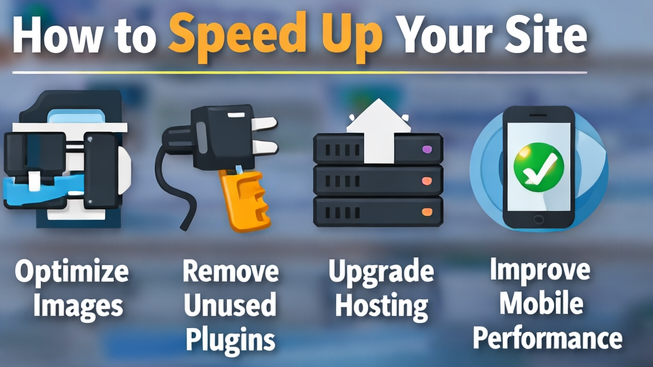
What You Can Do Without Overthinking It
You don’t need to rebuild your website to fix speed.
Start small.Compress your images before uploading.
Remove anything you don’t really need.
Check how your site works on mobile.
Sometimes, these simple changes make a noticeable difference.
When It Makes Sense to Get Help
If you’ve tried basic fixes and the problem is still there, it might need a closer look.
Not everything is obvious from the outside.
That’s where working with someone experienced helps — not to complicate things, but to simplify them.
Teams like APPENDO CONSULTING AND SERVICES usually focus on practical improvements instead of unnecessary changes.
If you want to explore more:
👉 https://www.acsindia.in
Final Thoughts
A slow website isn’t always caused by one big mistake. It’s usually a combination of small things that were never addressed.The good part is — most of these issues are fixable.And you don’t need to be highly technical to start improving them.Just paying attention to how your website actually performs is already a good step forward.