
Why Practice Alone Is Not Enough for Interview Success
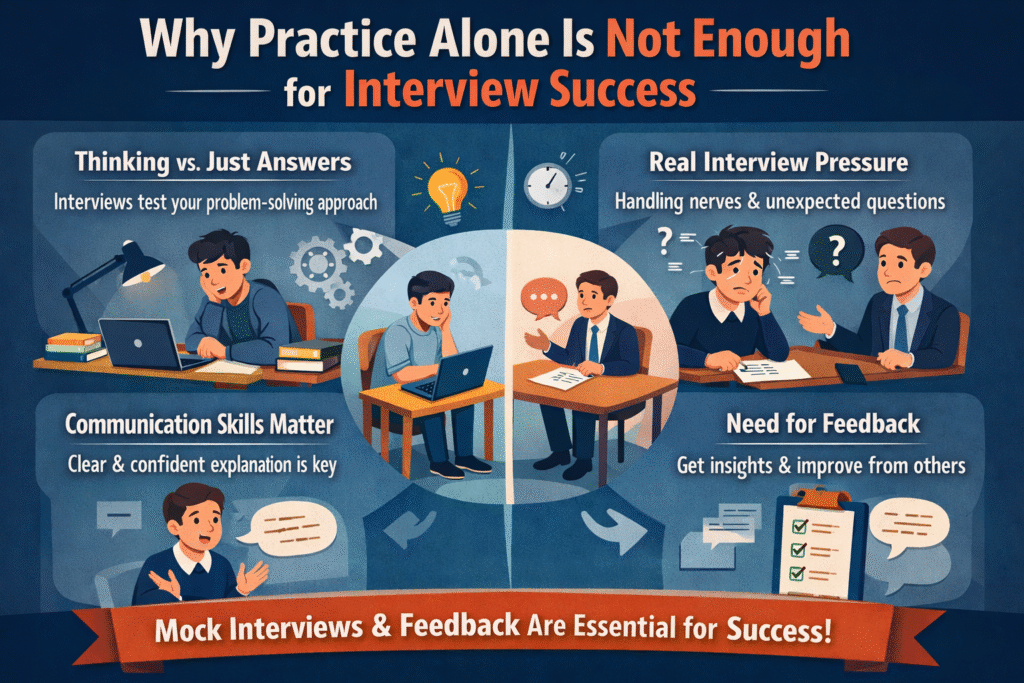
Many candidates believe that if they practice enough questions, revise all concepts, and prepare standard answers, interview success will automatically follow. But when the real interview happens, things often feel very different. Some candidates who prepared for months still feel nervous, struggle to explain their thoughts, or forget simple ideas they already know. This happens because interview success is not only about practice — it is about performance in a real situation.
Interviews Check How You Think, Not Just What You Know
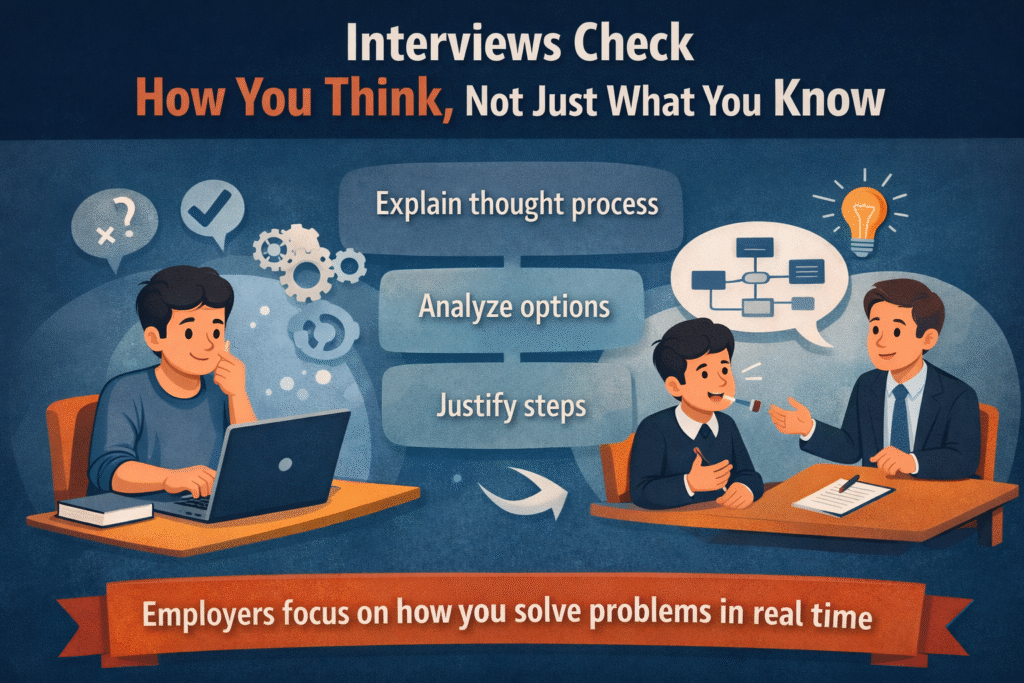
While practicing, most people focus on getting the correct answer. In interviews, however, recruiters pay close attention to how you reach the answer. They want to see your thinking process, how you analyze the problem, and how logically you move from one step to the next.
If you practice alone, you usually solve problems silently. But in interviews, you must explain your thinking clearly while solving the problem. Many candidates know the solution but struggle to explain it in a structured way, which creates the impression that they are unsure, even when they are not.
Real Interview Pressure Feels Different
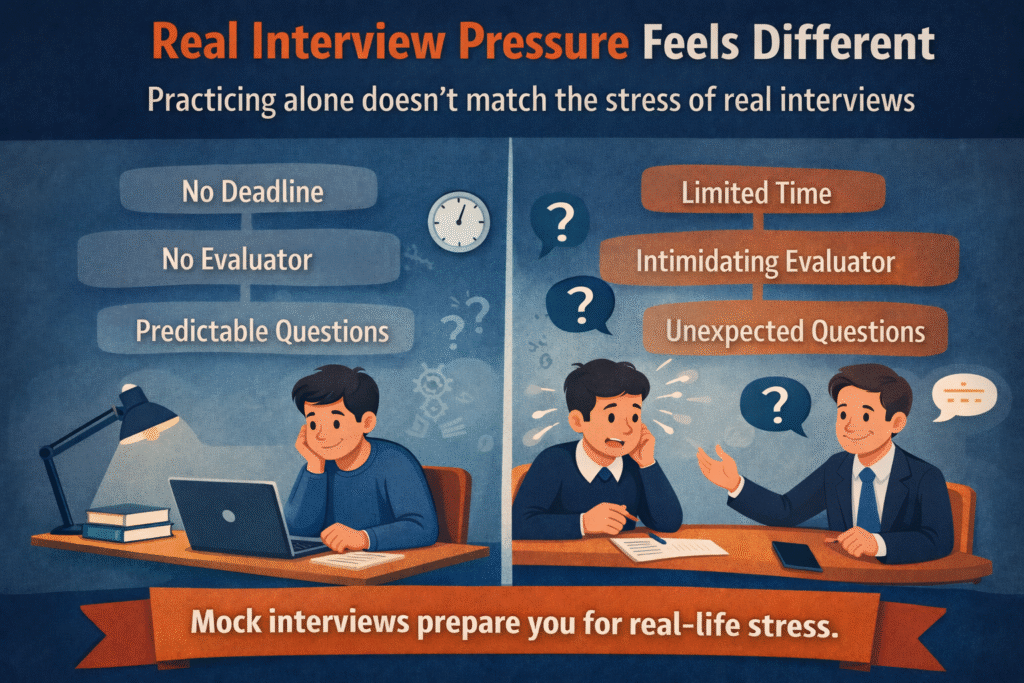
Practicing at home feels safe — there is no interviewer watching you, no time pressure, and no unexpected follow-up questions. In a real interview, the situation changes. You may feel nervous, you may be interrupted with new questions, or you may be asked to explain your answer in more depth.
Without experiencing this kind of environment beforehand, even strong candidates sometimes perform below their actual ability. That is why mock interviews and simulated practice sessions are so powerful — they prepare you for the real feeling of an interview, not just the questions.
Communication Often Decides the Final Result
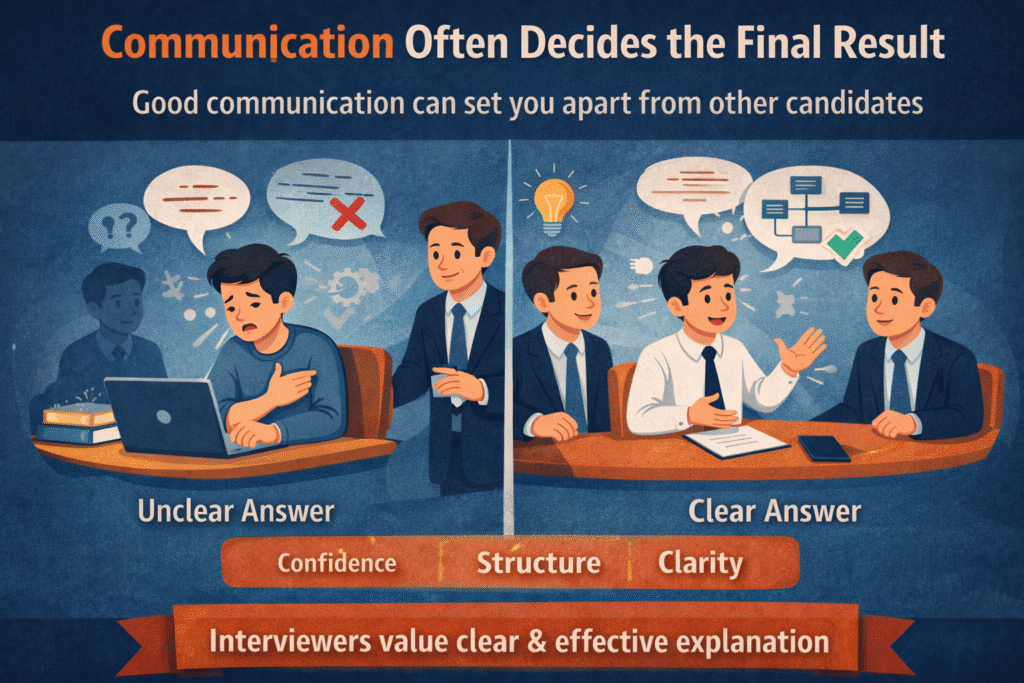
Many hiring decisions are influenced not only by knowledge but also by how confidently and clearly a candidate communicates. Two people may know the same concept, but the one who explains it in a simple, structured, and confident manner usually leaves a stronger impression.
Practicing alone rarely improves communication skills because there is no real conversation involved. Speaking your answers aloud, practicing explanations, and participating in mock interviews help you learn how to express your thoughts clearly and professionally.
Feedback Helps You Improve Faster
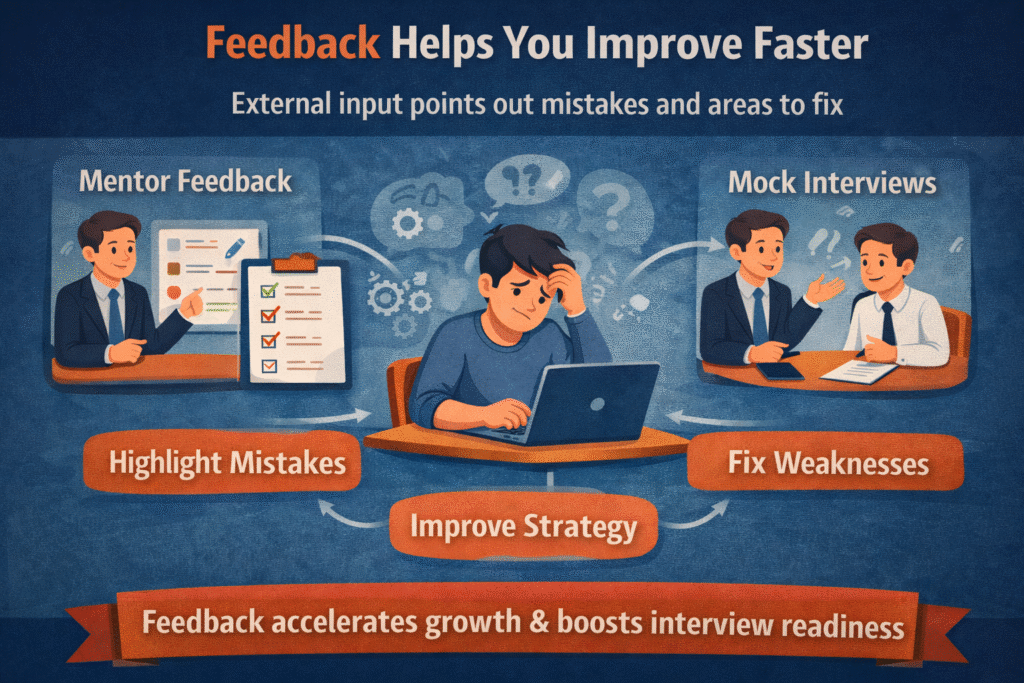
When you prepare alone, it is difficult to notice your own mistakes. You may be using an inefficient approach, explaining things in a confusing way, or missing important details without realizing it. Feedback from mentors, interview simulations, or mock interview platforms helps identify these gaps and shows exactly what needs improvement. This makes your preparation smarter, not just longer.
Conclusion
Practice is important, but practice alone is not enough. Interview success comes from combining preparation with real interview simulations, communication improvement, and consistent feedback. When you learn not only what to answer but also how to present your answers confidently and clearly, your preparation truly starts working for you.
